How Structure Sets Your Homeschool Free
As I have graduated my own daughters and moved toward mentoring the other homeschool parents at our scholé co-op, I have been thinking a lot about how to encourage families when they discover how difficult parenting and education can be.
Christian classical homeschooling is more than a practical alternative to public education—it is a different way of life, a radically different way of being in the world. We have made a bold, counter-cultural decision to raise our children in a tradition shaped by ancient wisdom, lost virtues, and the love of God. And if we are honest, this deeply counter-cultural work is very hard. Living out this beautiful vision in our chaotic, postmodern, techno-industrial world can feel very difficult.
I think it is important that we not ignore or sugar coat the difficulties of homeschooling, for this will only make it worse in the long run. If we are not open about the difficulties, then people can feel deeply discouraged when they do discover how hard the work actually is. We want to encourage one another honestly as we face the real challenges of counter-cultural education and seek by grace to grow stronger through those challenges.
This past year, I have been thinking about how one of the deepest challenges we face in 2025 is, ironically, our freedom. Not the classical freedom that comes from self-governance and virtue, but the modern ideal of radical autonomy. We live in a culture obsessed with doing whatever we want, whenever we want, with no constraints. Our idolatry of individual, unconditioned freedom makes it very hard just to live a coherent, meaningful, communally integrated life—much less homeschool a small herd of children.
The Exhaustion of Autonomy
Why is freedom a problem? Because God did not create us to be autonomous. We are fundamentally dependent, relational creatures—dependent on God, one another, and the created order. True freedom is found not in independence, separation, and autonomy, but by living in harmony with our nature, our limits, and our callings.
We are made for a healthy, well-ordered interdependence, yet industrialized, liberalized modernity has stripped away the social, religious, and practical structures that once governed our choices and self-understanding and helped us live together. For millennia we lived in villages that had closer contact to nature and that were centered around the church or temple. We now live in postmodern, machine-like cities that offer no shared, sacred, stable principles by which to make communally coherent decisions. We are left adrift in what sociologists call “liquid modernity” where foundational decisions—how to educate, how to eat, how to work, who to love—feel utterly open-ended and overwhelming.
The Carpenter’s Secret
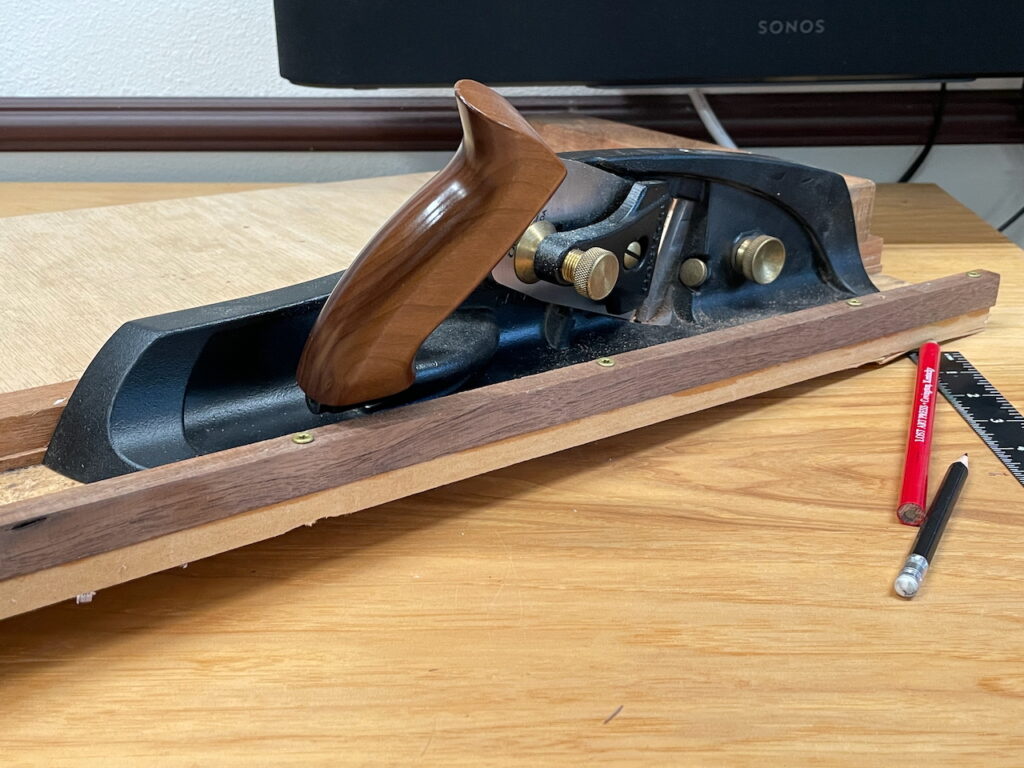
In his book The World Beyond Your Head, Matthew B. Crawford considers the social implications of liquid modernity through his contemplation of the carpenter’s jig. When a carpenter wants to cut a dozen boards for a project, he doesn’t hand measure each one; instead he makes a jig—a simple guide that allows repeated actions to be performed accurately and efficiently. Jigs work by limiting the freedom afforded by the working environment in order to stabilize and ease the process. Excellence in any given domain requires that we limit our freedom. We cannot do whatever we want and be good at anything we do.
In traditional societies, life was full of cultural jigs and structured limits—social norms, religious rituals, family rhythms, practical routines, church-centered city planning that guided behavior and reduced the mental burden of constant decision-making. Today, most of those traditional jigs are gone.
In the name of freedom, we have removed almost all of the traditional jigs that used to structure our life together (think about even just the loss of manners – people don’t know how to greet one another, men don’t know if they should open doors, etc… many people don’t even know how to interact with one another in even basic ways), and now every action we make must be individually measured, processed, and motivated. This is especially true for the homeschooler who has removed that one last jig—the powerful structures of the public school industry.
For the counter-cultural homeschooler, there is almost nothing left to virtuously structure our lives from the outside. It’s up to you—and me—as autonomous parents to meaningfully order and sustain a healthy family life on the open, slippery seas of liquid modernity. The few jigs we deal with—city traffic, addictive screens, industrialized commerce—don’t really help us dwell among the Good, True, and Beautiful things but rather guide our behavior in ways that fight against our goals and priorities.
As classical Christian homeschoolers, we have chosen a beautiful way of life, but many days it feels like we are having to scrape and hold it all together by sheer willpower.
A Few Good Jigs
According to Matthew Crawford, “the combined effect of removing these cultural jigs has been to ratchet up the burden of self-regulation. Some indication of how well we are bearing this burden can be found in the fact that we are now very fat, very much in debt, and very prone to divorce.” Free to eat whatever, we are fat. Free to spend whatever, we are drowning in debt. Free to love whoever, our families are profoundly broken—and that is not to mention how anxious, addicted, distracted, and overwhelmed we have all become.
In truth, we are finite beings with limited energy to self-regulate and exercise executive function. If you’ve ever said in exasperation, “Just decide, please!” you know what I mean. Our minds and spirits are exhausted as easily as our bodies, if not more so. We have limited willpower and limited tolerance for open-ended decision making. That’s just our nature. We can’t spend every day constantly trying to decide what to do next.
Without a few good jigs—routines, habits, structures—we won’t flourish; we probably won’t make it. Especially as hardworking homeschoolers, we desperately need habits, routines, and even physical structures that can jig and guide our life together. We need stable structures that will sustain our attention, guide our decision making, and extend our energy. Then, once those jigs are set up, we will have true freedom to go with the flow of the moment created by those well-formed, edifying, sustaining structures.
Let’s look more specifically at what kind of homeschool jigs—what kind of supportive, limiting structures—make this counter-cultural activity sustainable?
1. Jig Our Priorities
The first and most important jig for your family or homeschool is a clear set of priorities. Without firm clarity on our values, every choice becomes open and exhausting; we find ourselves overwhelmed with a vast sea of possible goods and no way to rationally choose between them. The hard truth is we can’t do everything; we cannot have it all. We are very limited beings. To say “yes” to homeschooling means saying “no” to many other good things.
If homeschooling, raising your children in the nurture and admonition of the Lord, is not one of your very top priorities, it will be the first thing to fall apart when life gets stressful—and life is always stressful!
If we are going to become the people God calls us to be, we have to let His kingdom priorities guide the choices that we make. This means sitting down together and writing out your top 3–5 family values and priorities, then posting them visibly in your home. Let them become the compass that guides your daily decisions. Revisit them once a month on date night with your spouse or at family meeting time, and assess how well you are holding to what is highest and best.
This doesn’t have to be onerous or complicated. It can be simple, but it needs to be clear. For our family, we made communion, prayer, relationship, sabbath, and learning our top family values. We prioritized Church, our homeschool co-op, morning devotions, family dinner, and a yearly vacation as our top four priorities. These values and priorities were sacred for us; they held our life together.
The opposite is also very important—we need to name the things we will say “no” to doing so we can preserve time and energy needed for the most important things. For me, I intentionally choose to ignore my nails, to keep a very simple haircut and wardrobe, to let the house be plainly decorated, to forget trying to have a nice lawn, to limit my active friendships, to let extended family be disappointed with me, and to stay off social media when the girls were younger.
For some of us, firm boundaries can feel very un-American and deeply counter-cultural, but we must learn to limit ourselves if we are to survive. We cannot do everything; we cannot have it all.
If we don’t have very clear priorities that structure who we are and who we want to become through the choices we make, then our choices will be made by forces from the outside, forces very interested in manipulating us for their own profit and advantage. We must make the hard decisions to prioritize the most important things in life, or by default, we will miss out on what is best.
2. Jig Our Time
Modern life is chaotic, fast-paced, and fragmented, but creation itself is ordered by the days and nights, the seasons and sabbaths. We, too, are part of nature; we are also made to live according to these natural rhythms, to the unheard music of the spheres.
We flourish when we follow these rhythms, but in our chaotic, technological world we have to fight for them. We have to intentionally create sustainable routines and habits that connect us to the created order and give us, our families, and our homeschools a sense of pacing and sustainability. We have to jig our time.
But we can’t control every minute of every day. That’s not part of the created rhythm of the world, either. As a basic structure I recommend that we think about creating daily, weekly, and yearly anchors.
- Daily anchors: Each day the sun rises and sets; this is the most basic rhythm of our lives, so it is important to begin and end our day with consistent habits. We need to find ways to regularly gather and coordinate the attention of the family in the morning as we begin the tasks of the day. And then we need to do this again in the evening as we reflect, connect, and prepare for rest.
- We chose to start every morning in the kitchen going over to-do lists and saying morning prayer together. Then, during homeschool years, we moved to our morning time school routine as developed by Cindy Rawlins.
- At night, when the girls were young, we would read a book, say a short prayer, go over the to-do list for morning, hug, and say I love you. These anchors can and should often be short and sweet so they can be truly sustainable.
- It’s so easy to skip these little routines when you are stressed, busy, and exhausted, but morning and evening anchors make all the difference in the long run by keeping us connected and organized. We can’t let the chaos take over.
- Weekly anchors: God has given us the weekly sabbath. It is also part of the creation order given to us in Genesis, which is why the church has always gathered for weekly worship. In addition to weekly worship, families also need a regular time to rest and play together. It’s important to schedule a weekly ritual of family fun—a time to play a game, go for a walk, share a special meal. These are important times for bonding; these times of fellowship are what all the work is for! Be committed to and consistent with this weekly celebration. We need rest and joy in our lives! We can’t as a family go non-stop 7 days a week and actually enjoy each other. Without a commitment to joyful sabbath—in whatever form fits your family personality—your kids will start to resent their life and resent you for making it that way.
- Yearly anchors: God has also created seasonal feasts that orient us to the redemptive meaning of nature—winter, spring, summer, and fall, Advent, Christmas, Lent, Easter, and Pentecost. To live into these yearly rhythms, it’s important that we plan and protect regular family vacations and feast heartily on high holy days. We have to party! Our yearly rhythms connect our ordinary lives to the sacred story of death and resurrection. These festal moments—Christmas, Easter, Thanksgiving—these help us practice the virtue of hope by always giving us something to look forward to and a way to remember who we truly are.
When we “jig” our time with these meaningful patterns, we aren’t adding to our burdens—we’re making our lives meaningful, sustainable, and truly worth living. The sacred rhythms of life are part of that Logos Christ-pattern we are created to know and imitate.
3. Jig Our Space
We are embodied creatures. Homeschooling happens in physical space, and that space shapes our attention and relationships. Open-concept homes are beautiful, but they’re often distracting. As incarnate souls, our attention is connected to what we are experiencing physically, so we need to gather and jig our learning life through spatial structures.
In our home, we made specific spaces part of our homeschool habits to help our brains transition and focus from one activity to the next.
- Morning time happened on the floor with pillows, candles, and books.
- Grammar and writing stayed at our school desk.
- Math took place at the kitchen table.
- Memory work was practiced on walks or car rides.
When thinking about the spatial structure of our homes, it is essential to remember that digital screens are a kind of anti-space where anything and everything tends to happen. Screens jig the brain toward quick and repeated distraction, so it’s essential that we create screen-free spaces in our home—for schoolwork, meals, and family time—so that physical, incarnational attention and relationship can flourish.
- No phones at the dinner table
- Screen-free bedrooms
- Set screen time limits
The Way of the Craftsman
Let’s land the plane by returning to the wisdom of the craftsman. A master carpenter never relies on raw willpower. He builds a workspace full of jigs and habits that free his hands to work with skill and free his mind to focus. Likewise, a master homeschooler doesn’t try to reinvent every day from scratch or hold the family together by sheer willpower and parental fiat. She creates and commits to rhythms, spaces, and structures that support and sustain the life she’s building with her family.
Homeschooling is hard. It’s heroic work. But it’s not meant to be held together by mom’s or dad’s moment-by-moment energy alone. We will burn out if we try to live that way.
As you press into the fall semester, I encourage you to step back from thinking about content so much and take time to think about the structures of your homeschool. Set up your home and habits in ways that extend your energy, anchor your days, and guide your family toward the good life for which we were made.
When we school with a content-first mindset, we get easily overwhelmed with all the things that our kids should learn. When we school with a structure-first mindset, we are creating a home-culture that facilitates learning for the long-run. When we work without jigs, we become exhausted and actually learn less, but when we jig first, our work becomes effective and sustainable. Needing these structures is not a weakness—it’s part of good craftsmanship.